Renting and selling
Fuerteventura: where to buy a house, area by area
A long, low-lying, windy island with four completely different ways of living on it. This is how I explain it to people who ask me where to start.

Luca, in the Canaries since 2014
Updated on · 6 min read
In brief
Fuerteventura is chosen for its beaches, its space and a slow pace of life, and it splits into four areas that are nothing like each other: Corralejo in the north, the centre between Caleta de Fuste and the capital, Costa Calma and Jandía in the south, El Cotillo in the west. My advice: work out which wind you can live with first, then look at properties.
In this guide 6 sections
The island in two lines
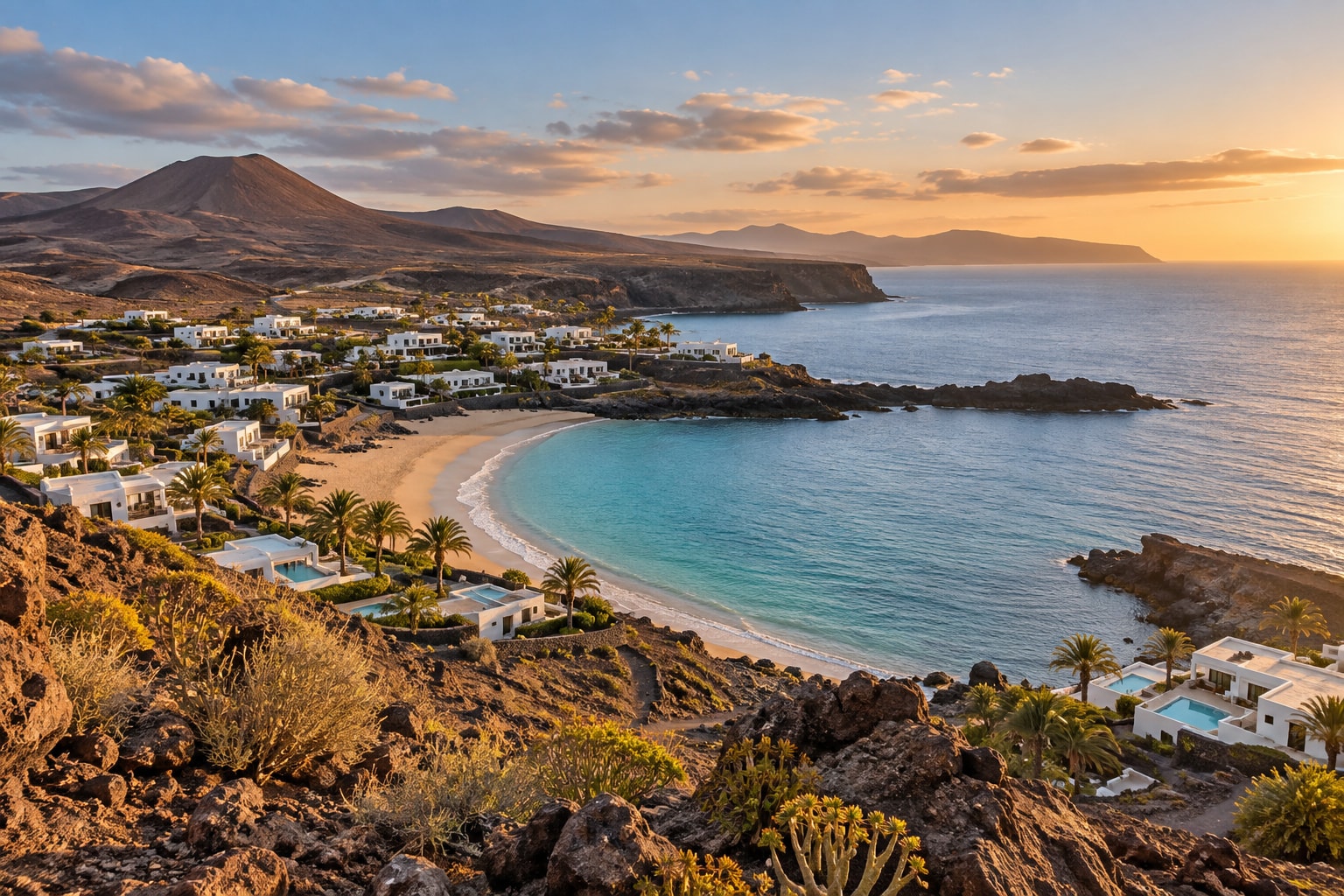
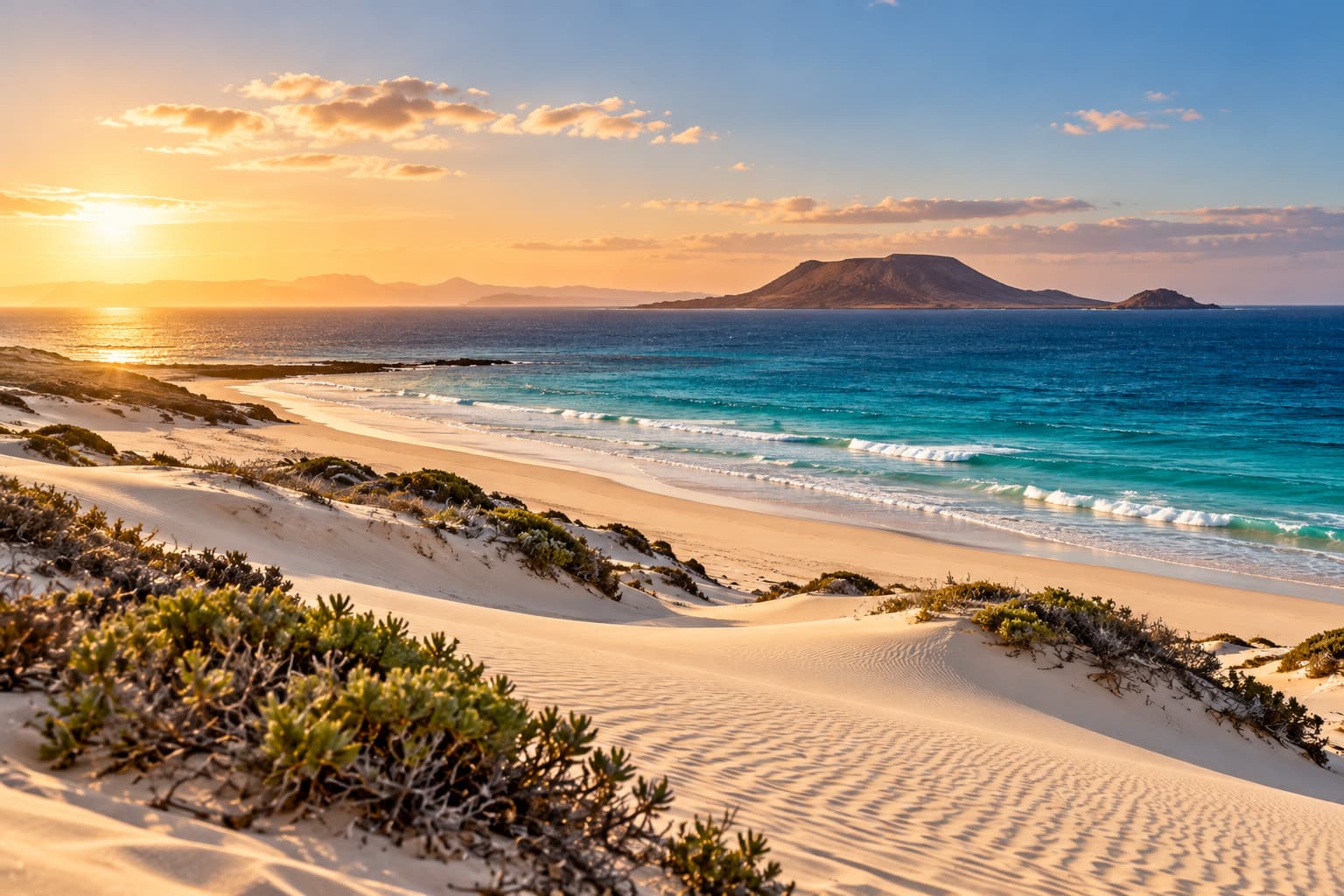
Fuerteventura is long, low and dry. It has no mountain splitting the climate in two the way Tenerife does: it has the wind, which almost always comes from the same direction, and a west coast that UNESCO, when it declared the island a biosphere reserve in 2009, describes as free of human intervention for over a hundred kilometres. The same document says the climate is very arid, to the point that tree cover is almost completely absent: that's exactly what you see while driving, and anyone arriving hoping for green is caught off guard.
This is where I always start with people who write to me: Fuerteventura either gets under your skin in the first week or it never does. The people I've seen settle in best here are the ones who love the sea every day, space, quiet and village life; the ones looking for buzz, shopfronts and city-level services end up catching the plane too often after a while.
North: Corralejo
Corralejo is where I send almost everyone arriving from abroad for the first time. It's a town that grew up around tourism but stayed walkable: you can live without a car, the dunes of the natural park are minutes away, and there's the port with ferries to Lanzarote and to the island of Lobos just offshore. There's a large, visible international community, with shopkeepers, restaurants and professionals: for anyone who doesn't speak Spanish yet, it's a genuine cushion.
What I look at here, beyond the property itself: whether the building is for residential or tourist use, because that difference affects what you can do with it; the rules of the comunidad, the owners' association; and the wind, which hits some streets hard and others not at all. The rest of the municipality, La Oliva, has a different face from Corralejo: Lajares and Villaverde are inland villages, with low houses, land, and a more distinctly Canarian feel.
Centre: Caleta de Fuste and Puerto del Rosario
Caleta de Fuste is the tidiest part of the island: developments with pools, a small marina, the golf course, a sheltered bay and the airport nearby. It doesn't have Corralejo's character and isn't trying to: it's the choice for someone who wants a comfortable property with predictable upkeep, usable even for short stays. The sea here is calmer than elsewhere, and for anyone with young children, or who isn't keen on waves, that matters.
Puerto del Rosario is the capital, and on the island it plays the role a city has to play: hospital, offices, schools, a port, real shops. It's not a postcard seaside resort, and for exactly that reason it's the area I recommend to anyone genuinely relocating who wants an apartment to live in year-round, without paying the premium for a tourist location. Here too I look at the building before the property: the lift, the state of the façade, what the minutes of the last owners' meeting say.
South: Costa Calma and Jandía
Heading down towards the La Pared isthmus, the landscape opens up and you reach the beaches that made the island famous: Sotavento, Costa Calma, then Morro Jable and the Jandía peninsula. Tourism here is more international, the German presence is long-established, and the buildings are largely residences and complexes facing the beach. This is the part of the island where the relationship between house and sea is most direct, and where the wind, in certain months, takes centre stage.
It's also the part furthest from the airport and the capital's services: if you buy here, a car isn't optional and the big shop is a weekly trip, not a daily one. Morro Jable has a village feel, with a port and shops that keep going all year; Costa Calma lives more by season. To anyone who wants to spend their winters here, I say so clearly before showing any properties, because it's a fact that changes the choice.
West: El Cotillo
El Cotillo is a fishing village turned destination for people looking for the sea without the tourist frame: the lagoons to the north, sheltered and clear, the open beaches to the west with the waves and the sunsets, low houses and few storeys. I like it, and I say so as a personal taste, not a fact: it doesn't have Corralejo's range of services, and some places close in winter.
People who buy here have usually visited several times first. It's the case where I push hardest for renting for a few months first: a small, windy village either wins you over or wears you down, and you can't tell which from a week's holiday.
Wind, sand, water: what I check in a property here
- Which way the terrace faces On this island it isn't about sun, it's about wind: a beautiful terrace facing the wind gets used far less than you'd think. I ask to view the property on a windy day, not a calm one.
- Frames, railings, screens Salt air and fine sand are the two enemies: I check the state of the window frames, the hinges, the railings, the shutters. It's the cost that buyers from abroad underestimate the most when they work out the budget for a property.
- Where the water comes from and who bills it I always ask how the property is supplied, whether there are tanks or pumps, who maintains them and how usage is split within the community. I won't give you numbers because I haven't verified them: I'll give you the right question to ask before you sign.
- What's actually on the record Enclosed terraces, pools, extensions: here, as elsewhere in Spain, what you see doesn't always match the nota simple. I read it before any offer, and if there's a discrepancy I ask the council how the paperwork stands.
- Residential or tourist use This changes the building's rules, the taxes and whether you can let it out. If your plan is to let to tourists, the vivienda vacacional licence and the community's rules are the first thing to check, not the last.
Listings for the island, ours and our partner agencies' on the ground, are on the Fuerteventura page. Tell me which of these four areas you see yourself in, and how many months a year you plan to spend there, and I'll tell you where I'd start looking.
The two facts about the island quoted here come from UNESCO's biosphere reserve entry; the rest is how I see it, after years on the islands. It isn't a ranking of areas and contains no price or market estimates.
Frequently asked questions
Is it always windy in Fuerteventura?
It blows often, more in some areas than others: it's one of the reasons the island is loved by anyone who does watersports. I won't give you averages because I haven't read official tables for the island's weather stations; I'll tell you to view the property on a windy day.
What's the best area for someone who doesn't speak Spanish?
Corralejo, for its international community and services in several languages, and Caleta de Fuste as a second choice. That said, learning Spanish is still the thing that changes daily life here the most, and it's worth starting before you move.
Do you need a car in Fuerteventura?
In Corralejo, Morro Jable and central Puerto del Rosario you can live without one. Everywhere else, yes: the island is long, services are concentrated, and the connections between villages don't run as often as they would in a city.
Can I buy a property here to let to tourists?
Only if that property can get a vivienda vacacional licence and the community's rules don't forbid it. These are checks to make before committing, not after: I cover them in the dedicated guide to holiday rentals.
Fuerteventura or Lanzarote: which is better?
Fuerteventura has longer beaches and more space, Lanzarote is smaller, more organised and has a uniquely volcanic landscape. People who want sea and quiet usually choose the first; people who want everything close together and concentrated services generally do better on the second.
Sources
- Wikidata — Fuerteventura (Q192534) (opens in a new tab) accessed on
- UNESCO, programma Man and the Biosphere — Fuerteventura Biosphere Reserve (designazione 2009) (opens in a new tab) accessed on
Tax and legal information here is general guidance, not advice: for your own situation, consult a qualified professional.
Read next
Images marked AI are generated with artificial intelligence.