Renting and selling
La Palma after the volcano: buying a house on the green island
The areas and my own advice, as I see them, with the eruption figures taken from the Gobierno de Canarias' official statement.

Luca, in the Canaries since 2014
Updated on · 3 min read
In brief
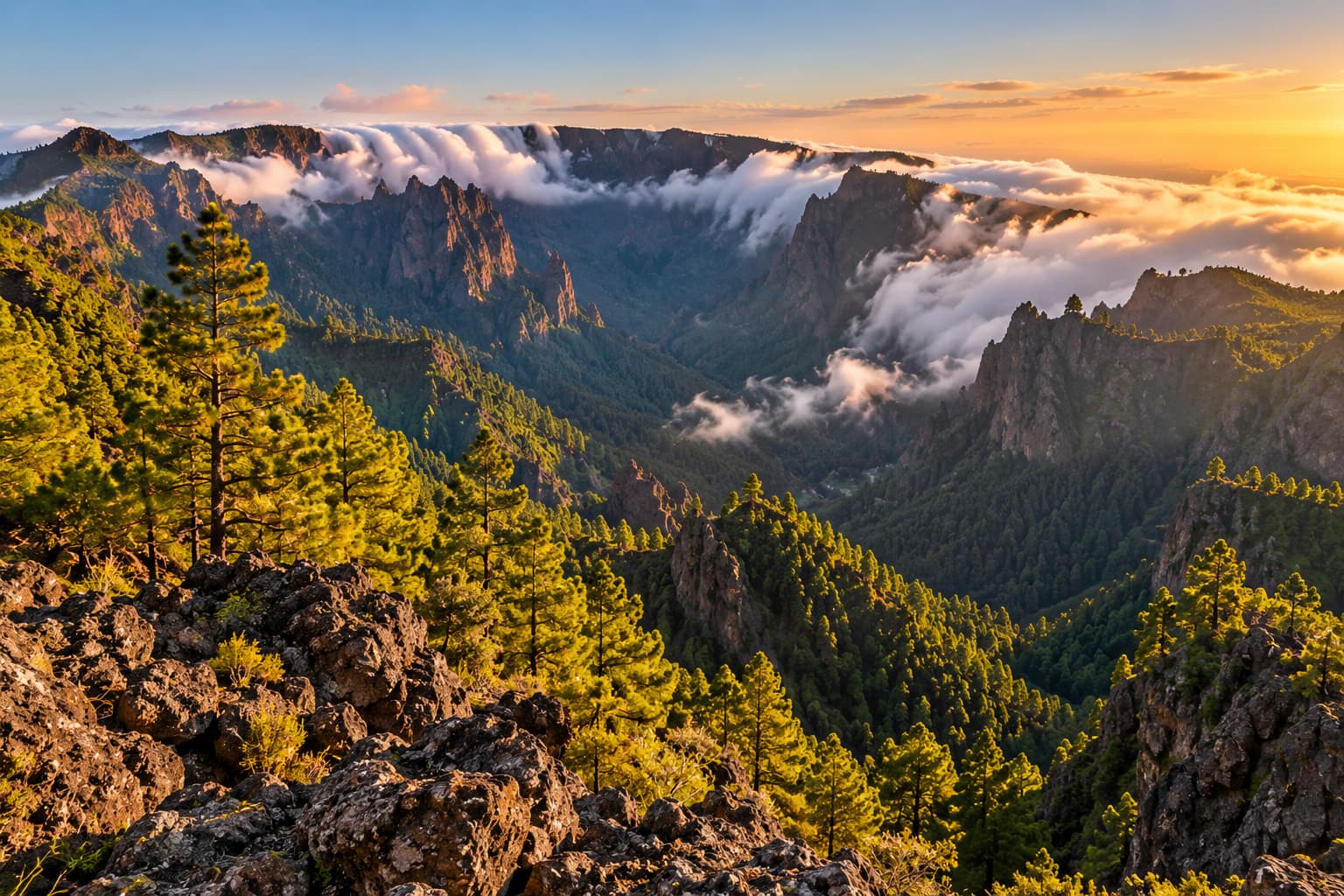
La Palma is the greenest of the Canary Islands: just over seven hundred square kilometres and fewer than ninety thousand people. The 2021 eruption hit one specific stretch of the western side, not the whole island. I send people here who want nature, quiet and land, and advise against it for anyone who wants services, bustle and easy holiday-rental income.
In this guide 4 sections
The island in two lines
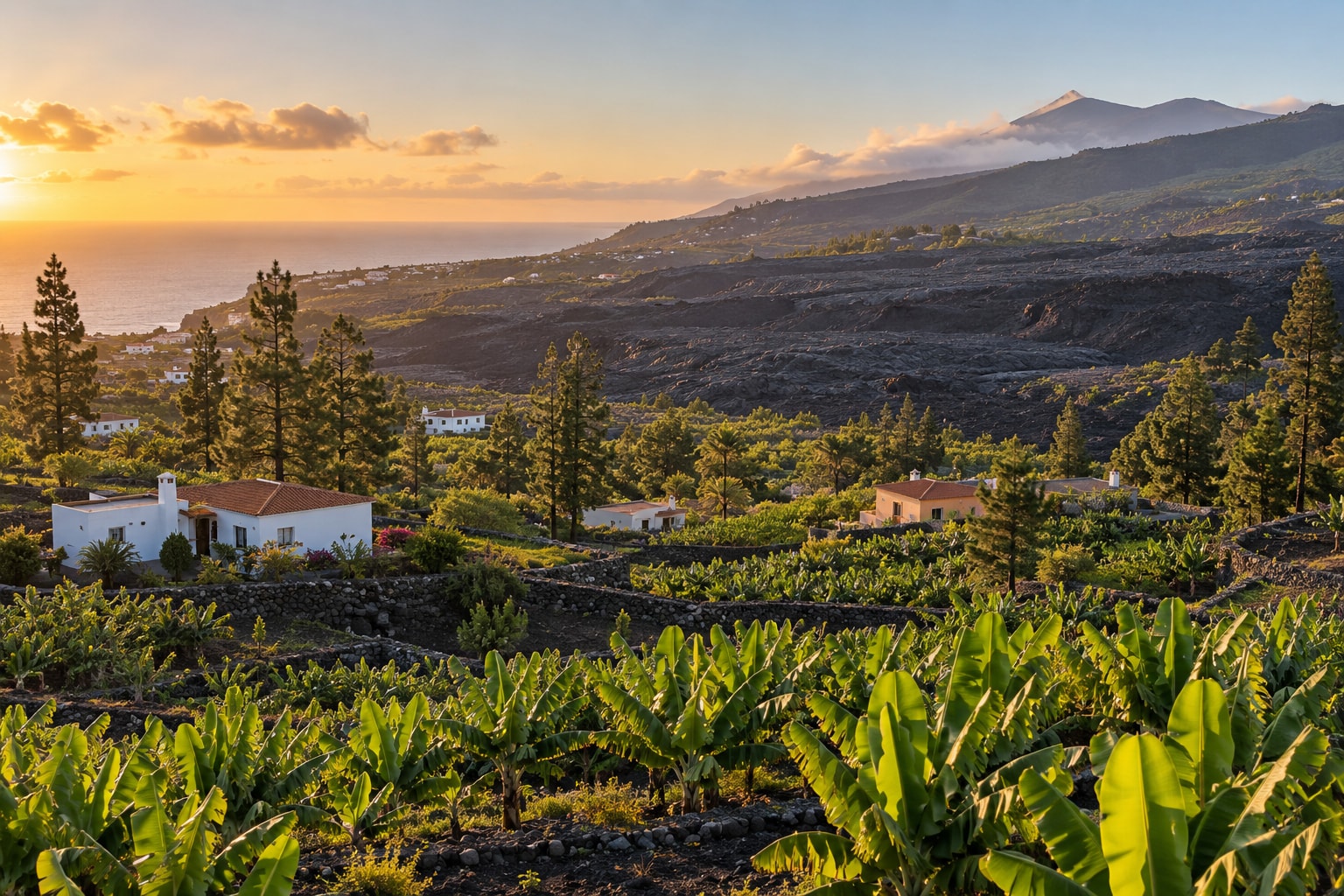
Seven hundred and eight square kilometres and just over eighty-six thousand people: La Palma is small, steep and farmed wherever it can be. Its highest point, the Roque de los Muchachos, hosts the astronomical observatories, and that tells you the rest: clear air, dark skies, little development. Tourism here means hikers and repeat visitors, not large numbers.
The 2021 eruption, with the official numbers
It's the first question people ask me, and it's right to answer with data rather than memories. The Gobierno de Canarias announced that the eruption began on 19 September 2021 in the Cumbre Vieja area and was declared over on 13 December of the same year, after 85 days and eight hours: the area covered by the lava flows is 1,219 hectares, and the same announcement gives the Copernicus satellite's estimate of 2,988 buildings destroyed and 138 damaged.
What those numbers don't tell you, and what you only understand by walking the ground, is how contained the area actually is: the flows affected a tongue of the western side of the island, between the towns of the valley. A few kilometres away, the island stayed exactly as it was. When I take someone round, the first thing we look at on the map is where the property sits relative to that tongue of lava, and which roads have been rebuilt.
Where people buy: the valley, the east coast, the fincas
- The Aridane valley, with Los Llanos, Tazacorte and El Paso, is the sunniest and most populated part: most of the housing is here, and here the closeness to the lava-flow area is the first question to ask.
- The eastern coast, from Santa Cruz de La Palma to Las Breñas, is the other side of the island: the capital, the port, services, a damper climate and village houses full of character.
- Fincas are the type of property most requested by people who write to me from abroad: land, fruit trees, sometimes a house that needs work. They're also the ones that need the most checks, because on rustic land what matters is the land classification and the water rights.
Who I'd recommend La Palma to
I recommend it to anyone who wants to live surrounded by nature and accepts that the island is remote: few flights, short but slow distances, shops that close early. I advise against it for anyone looking for bustle, services in their own language close at hand, or quick holiday-rental income.
One thing needs saying to anyone buying with holiday rentals in mind: the 2025 Canary Islands law treats La Palma, La Gomera and El Hierro more gently than the rest of the archipelago. The minimum share of residential building reserved for people who actually live there drops to 80% instead of 90%, the minimum age required of the property is five years instead of ten, and the permit lasts ten years instead of five. It still has to be the town's own planning scheme that allows that use: the gentler rules aren't a green light on their own.
Frequently asked questions
When did the La Palma eruption start and end?
According to the Gobierno de Canarias' announcement, it began on 19 September 2021 in the Cumbre Vieja area and was declared over on 13 December of the same year, after 85 days and eight hours of activity.
Is it risky to buy a house in La Palma today?
The area affected by the lava flows is contained and well documented: 1,219 hectares on the western side of the island. My advice is to check the exact position of the property on the official maps and to ask the town council about the state of the area before making an offer.
Can you let a property to tourists in La Palma?
Yes, if the town's planning scheme expressly allows that use. The 2025 Canary Islands law sets more favourable conditions for La Palma than for the larger islands, but the final word still belongs to the town's own plan and to the Cabildo, the island council.
Sources
- Gobierno de Canarias — «La erupción de La Palma se declara finalizada tras 85 días y 8 horas» (opens in a new tab) accessed on
- Wikidata, Q201689 (La Palma): superficie, popolazione, punto più alto (opens in a new tab) accessed on
- Ley 6/2025, de 10 de diciembre, de Ordenación Sostenible del Uso Turístico de Viviendas (BOC 246, de 12.12.2025), testo su BOE (opens in a new tab) accessed on
Tax and legal information here is general guidance, not advice: for your own situation, consult a qualified professional.
Read next
Images marked AI are generated with artificial intelligence.